The Tribe Magazine · Trends and prompts
Ugly Is the New Beautiful
Why we all suddenly want AI to draw us like six-year-olds with a box of crayons.
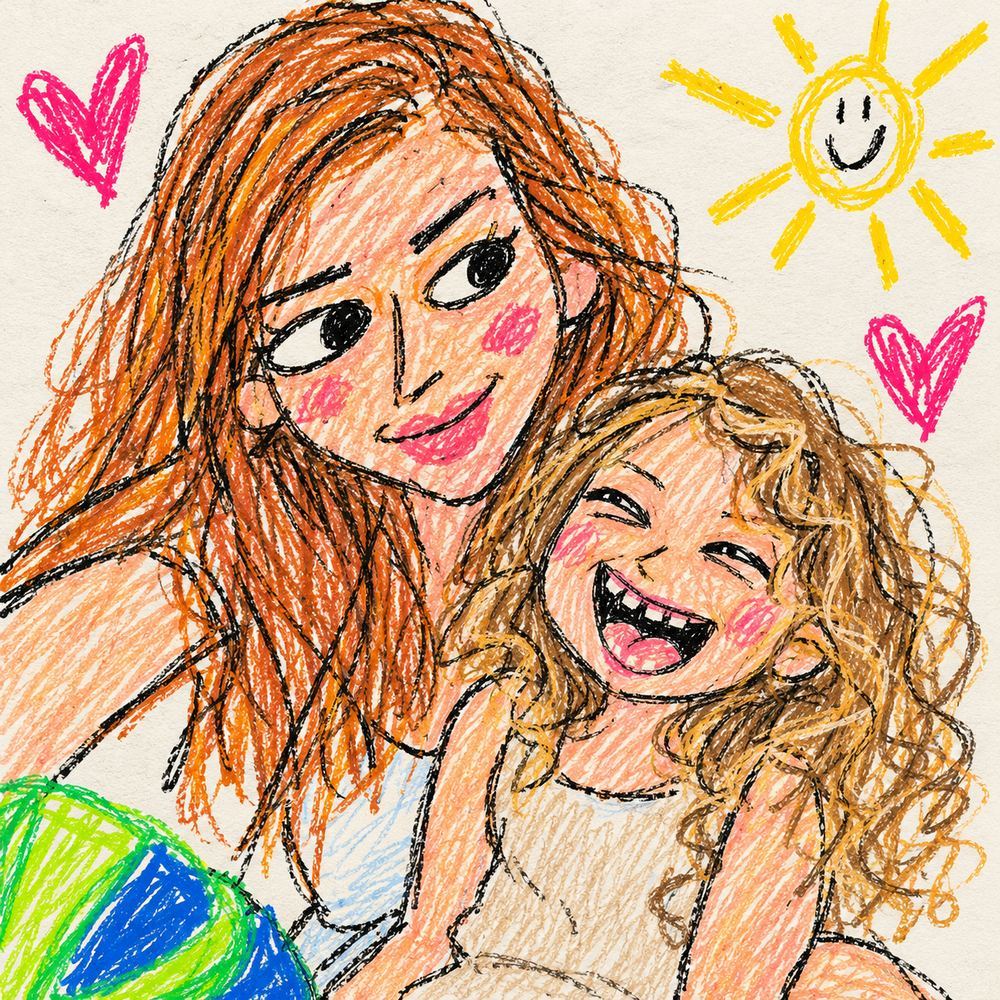
For a long stretch, all we wanted from AI was perfection. Smooth skin, correct lighting, precise composition, hands with the socially accepted number of fingers.
Then someone decided to ask it to draw badly.
Not "less well". Badly.
Wobbly lines, colour spilling past the outlines, proportions that match no anatomy course, eyes the size of dinner plates, hair like an angry scribble, and lettering that looks like it was written with the wrong hand.
And the result is lovely.
It is a combination of childlike doodle, crayon drawing andnaive illustration aimed at being ugly on purpose. You take an ordinary photo, a selfie, your kid with a milkshake, your partner, the cat doing something illegal on top of your head, and convert it into a drawing that looks like a child tried to reproduce it from memory with an old box of crayons.
The real joke is not the style itself. The pose, the expression, the relationship between the people, the small objects in the picture, all of it stays recognisable. The AI only translates them into a much sillier, freer language. That is what makes it funny.
As the models get better, flaws become more valuable.
A shaky line feels human. Bad proportion feels personal. Colouring that strays outside the lines feels like a real person sat down and drew. We are taking the most advanced technology in the world to produce something that looks like it took five minutes on the living room floor. That gap is the magic.
The trick that makes it work: Write only "crayon illustration" and you will get a polished, sweet children’s illustration, the exact opposite of what you want. You have to give the model explicit permission to be bad.
The words that do the work:
Not "crayon style". Deliberate incompetence.
Turn this photo into an intentionally ugly, funny, childlike doodle drawn with crayons and colored pencils on warm off-white paper. Preserve the recognizable identity, pose, expression, interaction, clothing and important objects from the original photo, but redraw them with hilariously awkward proportions, oversized uneven eyes, slightly strange noses, wonky anatomy and naive facial features. Use rough shaky black crayon outlines, messy overlapping scribbles, uneven coloring, visible wax texture and imperfect handmade marks. Do NOT make it polished, pretty or professionally illustrated. It should genuinely look like a funny child drew it.

Simplify the original background instead of faithfully recreating every detail, leaving generous areas of visible paper.

Add 3–6 spontaneous doodles around the subjects such as hearts, stars, arrows, smiley faces and tiny scribbles.

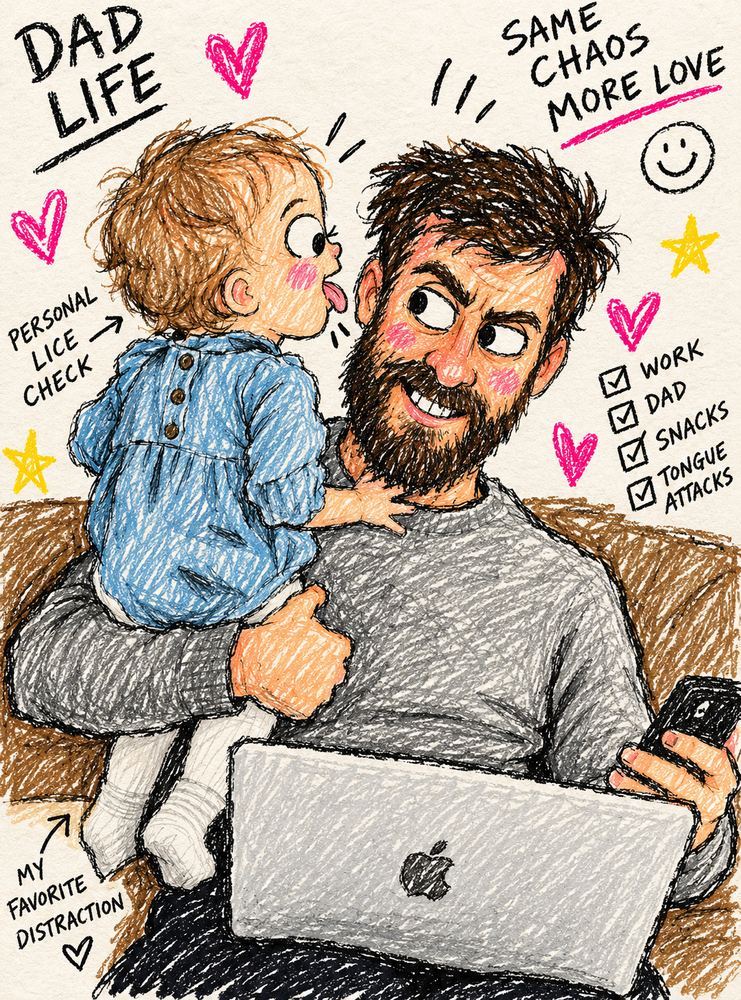
Most importantly, invent 1–3 SHORT, funny handwritten English annotations that specifically react to what is happening in THIS photo. The captions should feel witty, silly and personal, like notes in a chaotic visual diary. Use the actual pose, facial expression, relationship, animal, object or situation in the photo as the joke. Do not reuse generic captions from previous images.

The final result should feel charmingly BAD, weird, personal and genuinely funny rather than cute, polished or aesthetically perfect.
The main upgrade: the prompt now explicitly asks for captions unique to the specific image rather than generic captions that repeat across every image. And also, less fidelity to the original background, more room for blank paper.
It does not stop at a single portrait
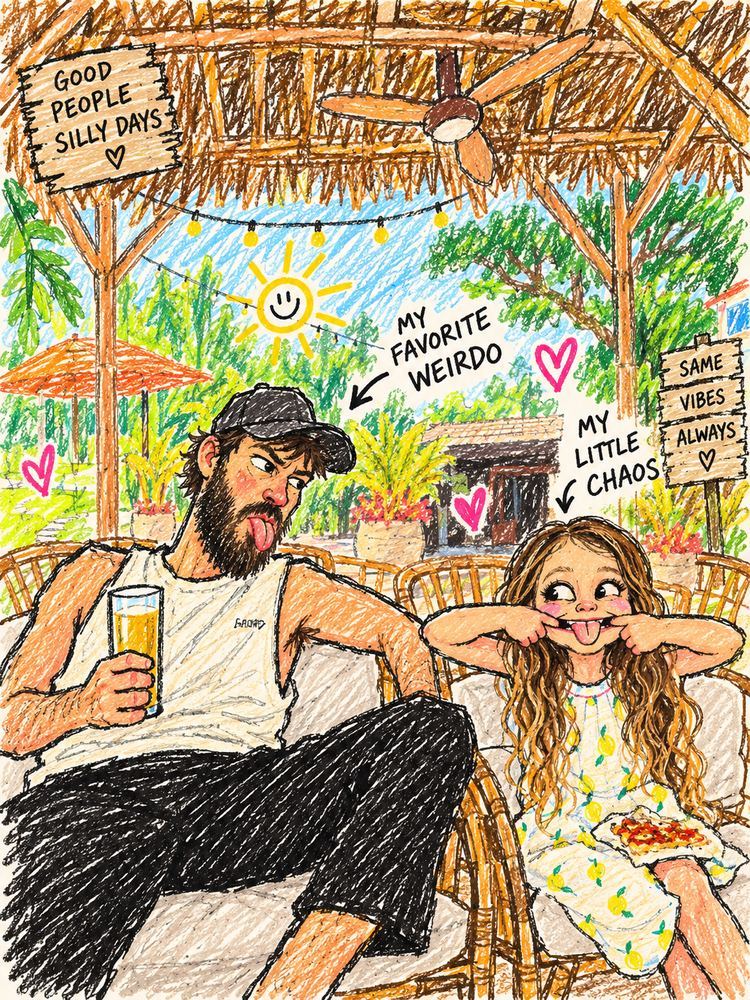
You can turn a whole family album into an illustrated diary. Draw an entire team in the same language. Build a fashion campaign that looks like the art director’s kid took over the brief. Turn holiday photos into a small book. Design covers, posters and invitations where the serious photographs get silly notes off to the side.
The real fun is letting the model respond to what is actually happening in the photo:
- cat asleep in an impossible position←NAP QUEEN
- cat sitting on your head←CAT THERAPY
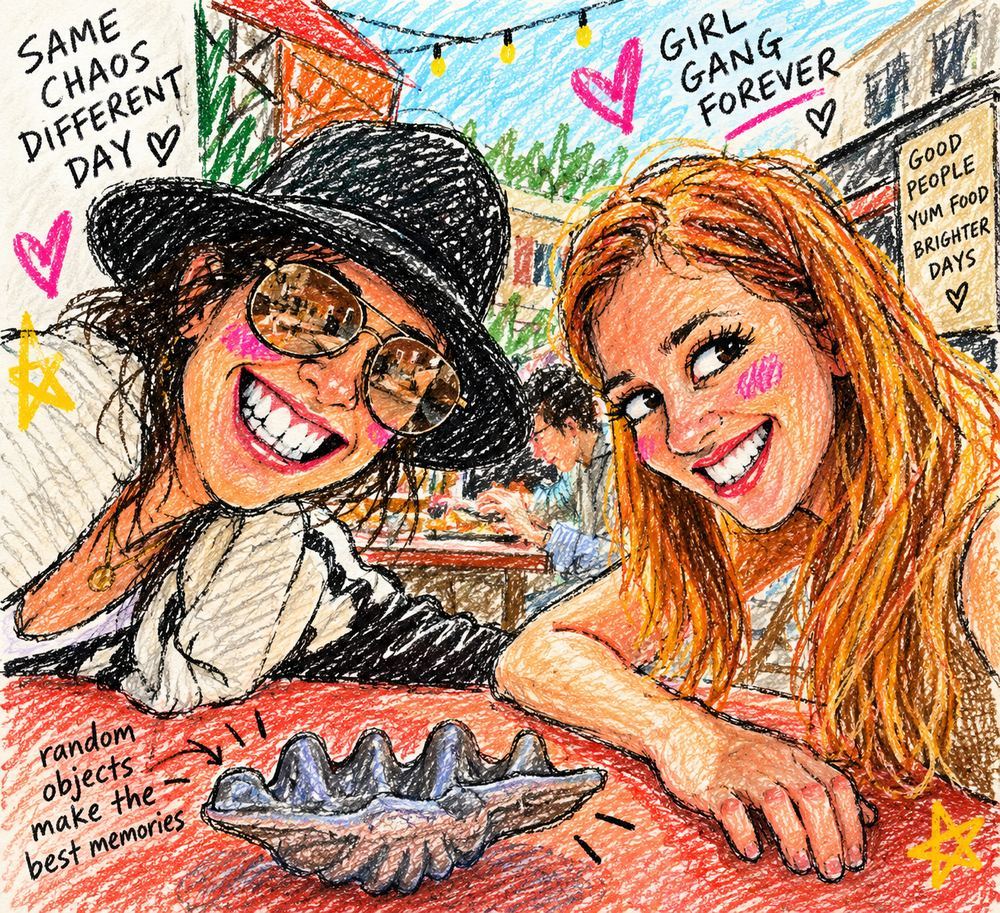
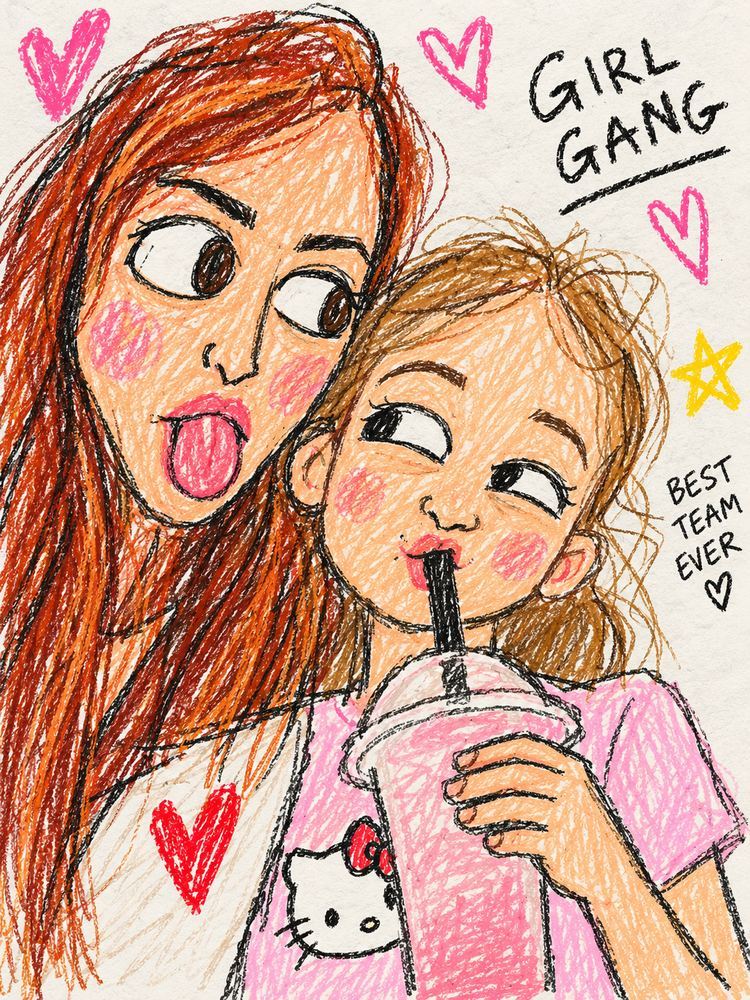
- two people pulling a silly face at the camera←GIRL GANG
The text becomes a layer in the story, not decoration.
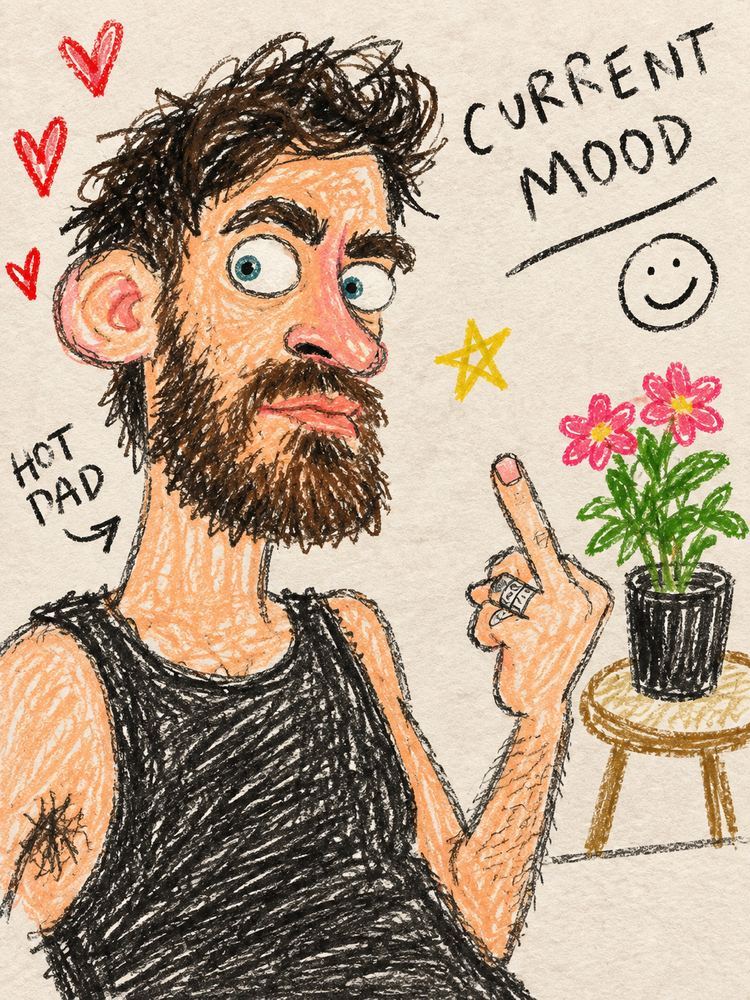
A few examples from the field
Different runs, different captions every time, exactly what the updated prompt promises.
One rule: do not improve it too much
The moment the line becomes pretty, the eyes symmetrical and the colouring clean, you have a professional illustrator impersonating a child. The goal is a result with enough mistakes in it that you want to keep it.
Odd thing to say about the most advanced technology in the world, but the real skill right now is knowing how much to ruin. No more, no less.